Selecting the best commercial oven for bakery operations is one of the most important decisions a bakery owner or chef can make. The oven directly impacts product quality, baking consistency, production efficiency, and ultimately customer satisfaction. With multiple types of ovens available in the market, understanding their features and suitability is essential before making an investment.
This guide provides a clear and professional overview of how to choose the right commercial oven based on your bakery’s size, product range, production goals, and overall bakery equipment requirements.
Understanding Your Bakery Needs
Before exploring oven types, it is important to evaluate your specific business requirements. Every bakery operates differently, and the ideal oven depends on factors such as production volume, menu variety, available space, and budget.
Start by identifying what you bake most frequently. Bread, pastries, cakes, and artisan products all require different baking environments. High-volume bakeries may need industrial baking ovens that support continuous production, while small bakeries may prioritize flexibility and precision.
Capacity planning is another key consideration. Choosing an oven that is too small can limit growth, while an oversized unit may increase operational costs unnecessarily. It is important to align the oven capacity with your daily production targets.
Types of Commercial Ovens for Bakeries
Understanding different oven types helps you determine which one aligns best with your business model.
Deck Ovens
Deck ovens are a popular choice for artisan bakeries and traditional bread baking. These ovens use stone or ceramic decks that provide direct heat, creating excellent crust quality.
They are ideal for baking products like sourdough bread, baguettes, and pizzas. Deck ovens allow precise temperature control for each chamber, making them suitable for bakeries that require flexibility.
However, they often require manual loading and unloading, which may not be ideal for high-volume operations.
Convection Ovens
Convection ovens use fans to circulate hot air evenly throughout the chamber. This ensures consistent baking results and faster cooking times.
They are widely used for pastries, cakes, cookies, and muffins. Convection ovens are efficient and easy to operate, making them a great choice for small to medium-sized bakeries.
While they provide uniform baking, they may not deliver the same crust quality as deck ovens for artisan bread.
Rotary Rack Ovens
Rotary rack ovens are designed for high-capacity baking. These ovens rotate racks inside the chamber to ensure even heat distribution, making them an essential part of cake production equipment in large-scale bakeries.
They are commonly used in large bakeries that produce bread and baked goods in bulk. Rotary rack ovens improve efficiency and reduce manual handling, making them suitable for commercial-scale operations.
These ovens require more space and higher investment, but they significantly enhance productivity.
Tunnel Ovens
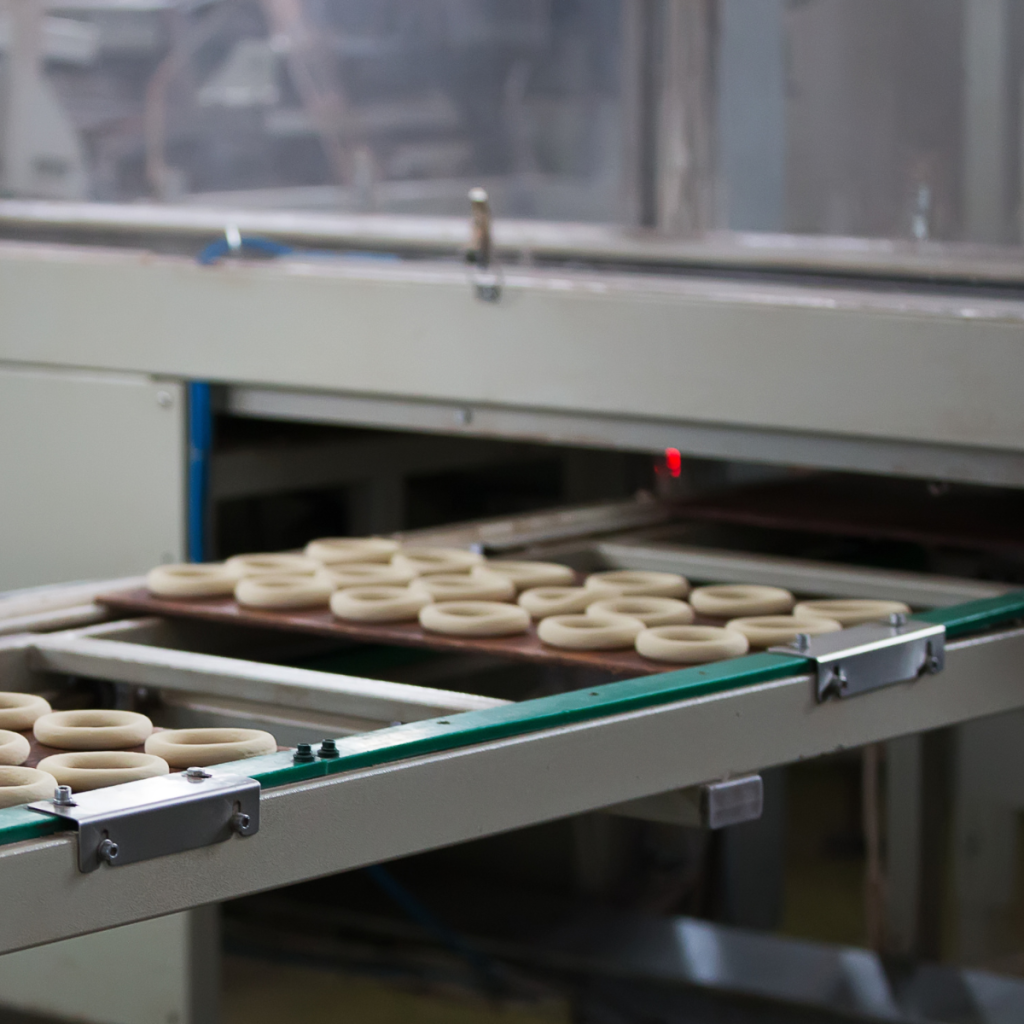
Tunnel ovens are used in industrial baking ovens setups where continuous production is required. Products move through a long heated chamber on a conveyor belt.
They are ideal for large-scale manufacturing of baked goods such as biscuits, cookies, and packaged items. Tunnel ovens provide consistent results and are highly automated.
However, they are not suitable for small bakeries due to their size and cost.
Industrial Baking Ovens
Industrial baking ovens cover a wide range of large-scale equipment designed for mass production. These ovens are built for durability and continuous use.
They often include advanced automation features, energy efficiency systems, and precise temperature control. Industrial ovens are best suited for large commercial bakeries or food production facilities.
Key Factors to Consider When Choosing an Oven
Production Volume
The volume of products you bake daily determines the type and size of oven you need. Small bakeries can operate efficiently with convection or deck ovens, while high-output bakeries benefit from rotary rack or tunnel ovens.
Product Range
Different baked goods require different heat conditions. If your bakery offers a diverse menu, you may need an oven that provides versatility. Some bakeries even use multiple oven types to meet varied production needs.
Space Availability
Commercial ovens come in various sizes. It is important to measure your kitchen space and ensure proper ventilation and installation requirements are met.
Compact ovens work well in limited spaces, while industrial baking ovens require dedicated areas.
Energy Efficiency
Energy consumption directly affects operating costs. Modern ovens are designed with energy-saving features that improve efficiency without compromising performance.
Look for ovens with insulation, programmable controls, and energy-efficient heating systems.
Ease of Use and Maintenance
User-friendly controls and easy maintenance are essential for smooth operations. Ovens with digital controls, automated settings, and self-cleaning features can save time and reduce labor costs.
Regular maintenance should be simple and accessible to avoid downtime.
Budget and ROI
Cost is a critical factor, but it should not be the only consideration. Investing in a high-quality oven ensures durability and consistent performance.
Evaluate the return on investment by considering factors such as energy savings, productivity improvements, and reduced maintenance costs.
Comparing Oven Types for Different Bakery Needs
Small bakeries often benefit from convection ovens due to their affordability and efficiency. Artisan bakeries typically prefer deck ovens for their ability to produce high-quality crusts and traditional baked goods.
Medium to large bakeries that handle higher volumes may choose rotary rack ovens for their capacity and consistency. Industrial bakeries rely on tunnel ovens or advanced industrial baking ovens for continuous production.
Choosing the right oven involves balancing production requirements with operational efficiency.
Importance of Temperature Control and Consistency
Consistent temperature is essential for achieving uniform baking results. Variations in heat can lead to uneven textures, inconsistent color, and product defects.
Modern commercial ovens come with advanced temperature control systems that allow precise adjustments. Some ovens also offer programmable settings for different recipes, improving efficiency and consistency.
Ventilation and Installation Considerations
Proper ventilation is crucial for maintaining a safe and comfortable working environment. Commercial ovens generate significant heat, and adequate airflow prevents overheating.
Installation requirements vary depending on the oven type. It is important to ensure that your bakery meets all safety standards and electrical or gas connections are properly set up.
Professional installation is recommended to avoid operational issues.
Maintenance and Longevity
Regular maintenance extends the life of your oven and ensures consistent performance. Cleaning, inspecting components, and servicing the equipment should be part of your routine.
Choosing a reliable brand with good after-sales support can make a significant difference. Access to spare parts and technical assistance helps minimize downtime.
Future Scalability
As your bakery grows, your production needs will increase. Choosing an oven that can scale with your business is a smart investment.
Some ovens allow expansion through additional racks or modular designs. Planning for future growth ensures that you do not outgrow your equipment too quickly.
Final Thoughts
Selecting the best commercial oven for bakery operations requires careful evaluation of your production needs, product range, and long-term goals. Each oven type offers unique advantages, and the right choice depends on how well it aligns with your business model.
Deck ovens are ideal for artisan baking, convection ovens offer versatility, rotary rack ovens enhance efficiency, and tunnel ovens support large-scale production. Understanding these differences helps you make an informed decision.
Investing in the right oven not only improves product quality but also boosts operational efficiency and profitability. Taking the time to assess your requirements and compare options will ensure that your bakery is equipped for success. For expert guidance and tailored solutions, contact us to help you choose the ideal oven for your bakery needs.
FAQs
What is the best commercial oven for bakery use?
The best commercial oven for bakery use depends on your needs. Deck ovens are ideal for artisan bread, convection ovens are suitable for pastries, and rotary rack ovens are best for high-volume production.
Are convection ovens good for baking bread?
Convection ovens can bake bread effectively, but they may not produce the same crust quality as deck ovens. They are better suited for cakes, cookies, and pastries.
How do I choose between deck ovens and rotary rack ovens?
Choose deck ovens for small-scale, high-quality artisan baking. Opt for rotary rack ovens if you need higher production capacity and consistent results.
What size commercial oven do I need for my bakery?
The size depends on your daily production volume and available space. It is important to choose an oven that meets current needs while allowing room for future growth.
How long does a commercial bakery oven last?
A well-maintained commercial oven can last 10 to 20 years. Regular maintenance and proper usage significantly extend its lifespan.